Lönnrot's journeys in Kainuu
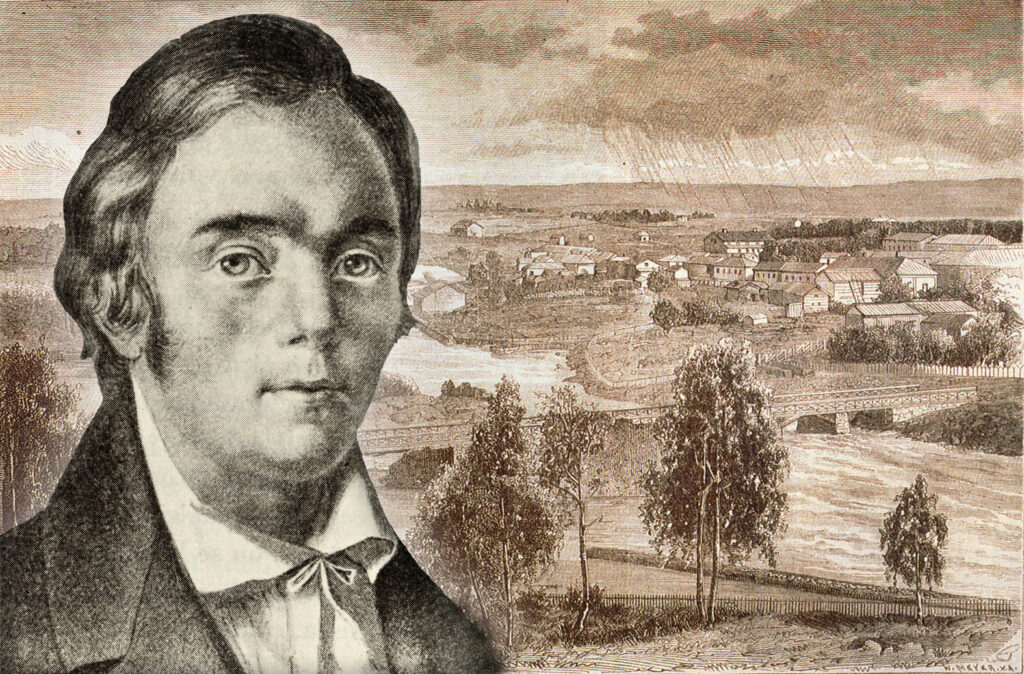
Lönnrot’s travels in Kainuu are exceptionally well documented. For each of his official inspection tours, he submitted detailed travel invoices to the Medical Board. He also kept extensive travel accounts of his poetry-collecting expeditions.
Although he did collect poetry in Kainuu, he did not do so systematically, but rather whenever the opportunity arose. The region has sometimes been described as suffering from the “passer-by problem”: eager to reach the renowned singing villages of White Sea Karelia, Lönnrot often hurried through his home province, even though Kainuu itself preserved valuable poetic traditions.
The First Journey (1828)
The purpose of Lönnrot’s expeditions was to collect sung folk poetry—runosongs—which were believed at the time, especially in their epic form, to preserve knowledge of ancient history. Such material was considered essential for building a shared Finnish identity. Lönnrot had already committed himself to this task during his student years at the University of Turku.
His first collecting journey took place from spring to autumn 1828, shortly after graduating. He intended to reach White Sea Karelia, but this plan failed; he advanced only as far as Nurmes. On this first journey, he did not reach Kainuu at all. The most productive stage of the trip was in Kesälahti, where Juhana Kainulainen sang more than 2,000 verses to him.
The Second Journey (1831)
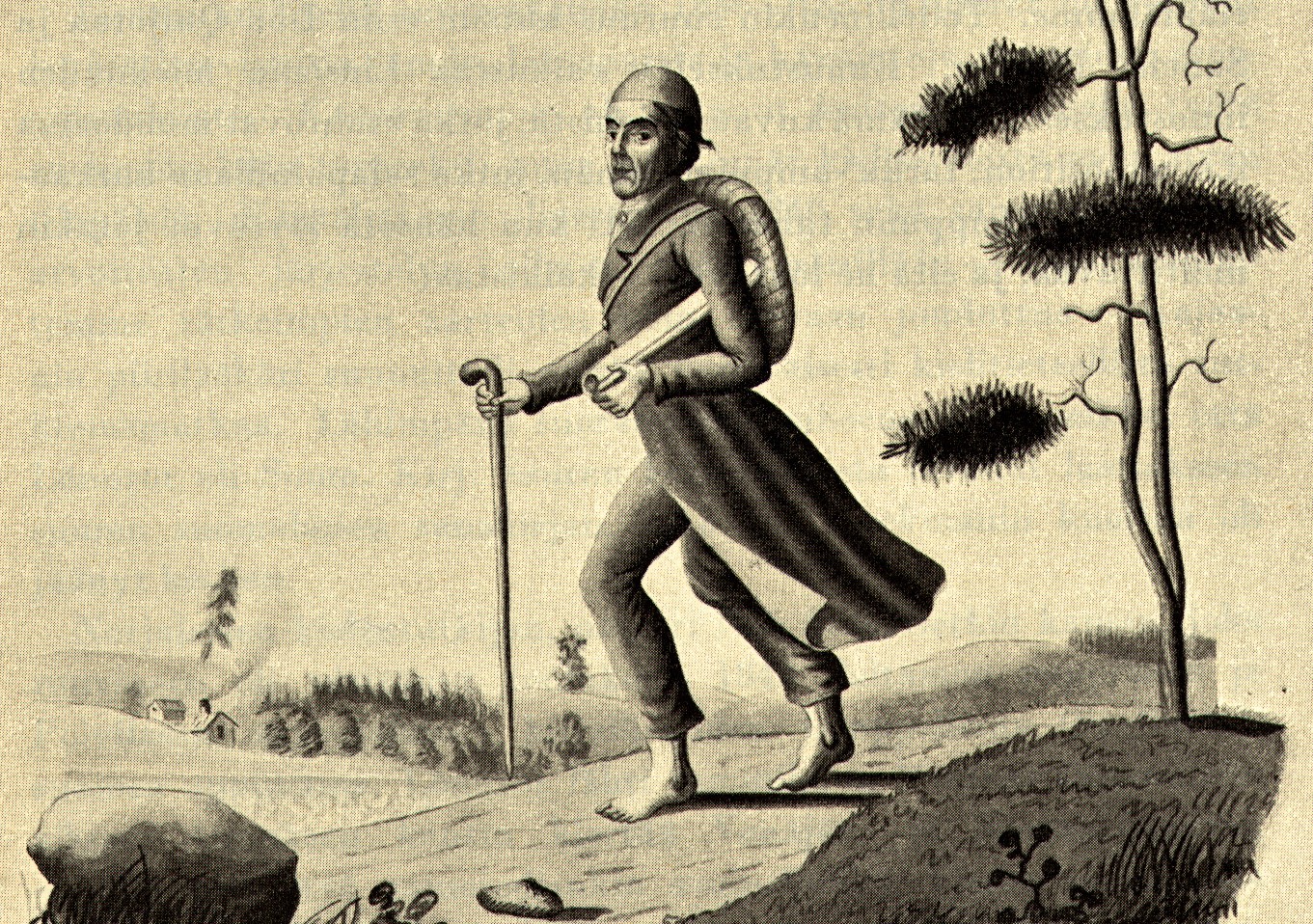
On his second journey (May 28 – August 22, 1831), Lönnrot again aimed for White Sea Karelia, where ancient runosongs were still alive.
Sponsored by the Finnish Literature Society, the expedition was cut short due to an epidemic that required him to return to Helsinki to fulfill his medical duties.
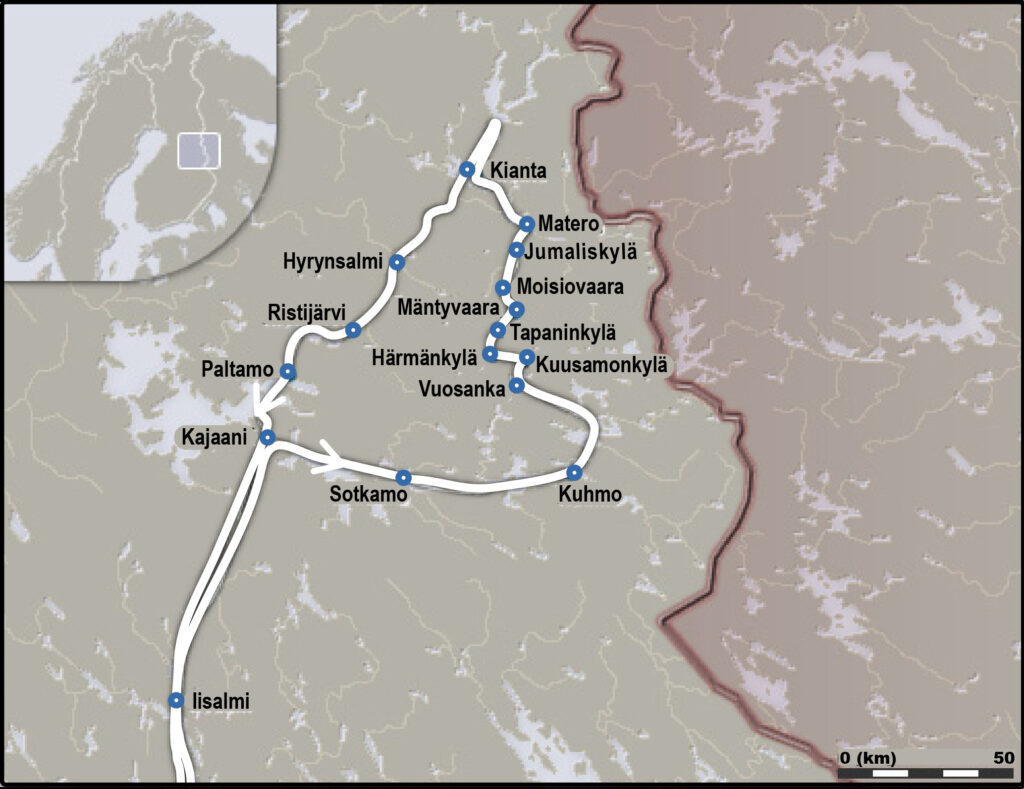
During this journey, he passed through seven Kainuu districts: Kajaani, Sotkamo, Kuhmo, Hyrynsalmi, Suomussalmi, Ristijärvi, and Paltamo.
Here is the route:
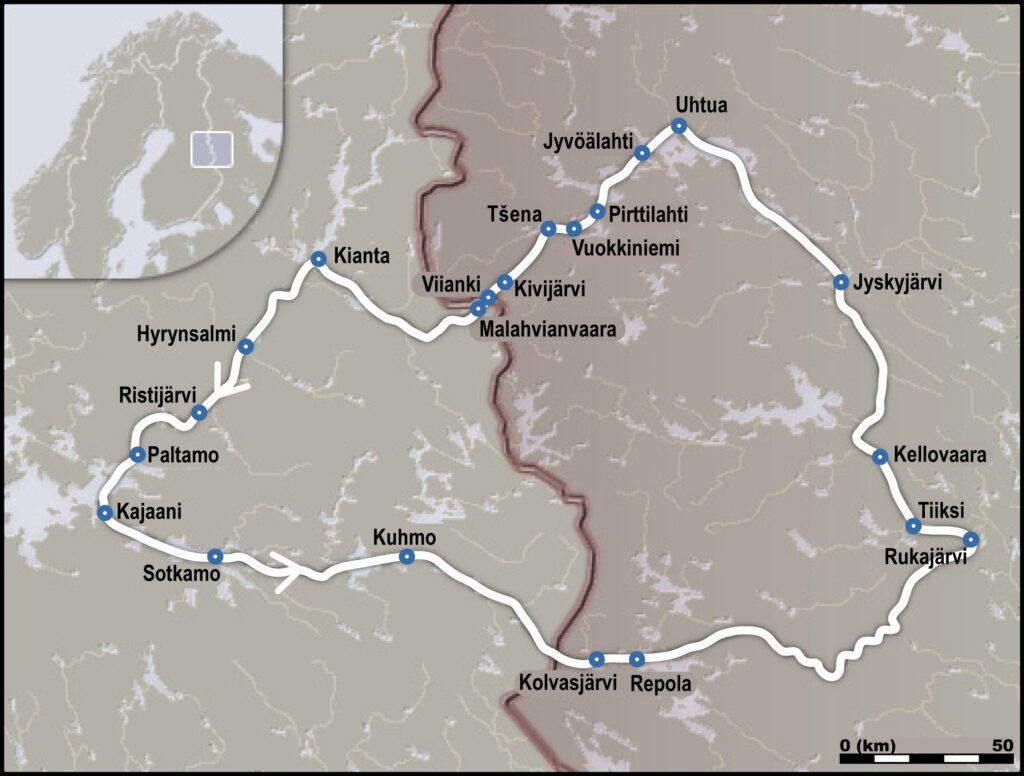
Helsinki - Rautalampi - Pielavesi - Iisalmi - Kajaani - Sotkamo - Kuhmo - Kianta - Hyrynsalmi - Ristijärvi - Paltamo - Kajaani - Iisalmi - Helsinki.
The Third Journey (1832)
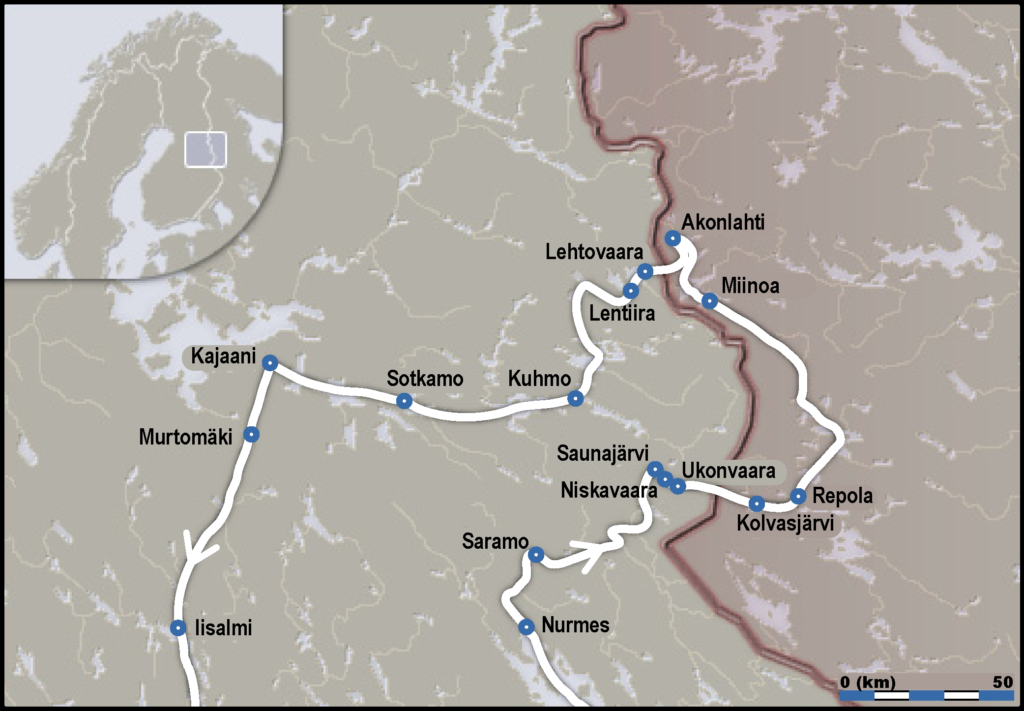
Lönnrot’s third journey began in Vesilahti on July 13, 1832, and ended in Helsinki on September 17. After a demanding and slow start, he finally reached White Sea Karelia for the first time, although he advanced no farther than Akonlahti.
There he realized the extraordinary richness of the region’s song tradition - an insight that would shape his subsequent expeditions. During this journey, he traveled through Kuhmo, Sotkamo, and Kajaani.
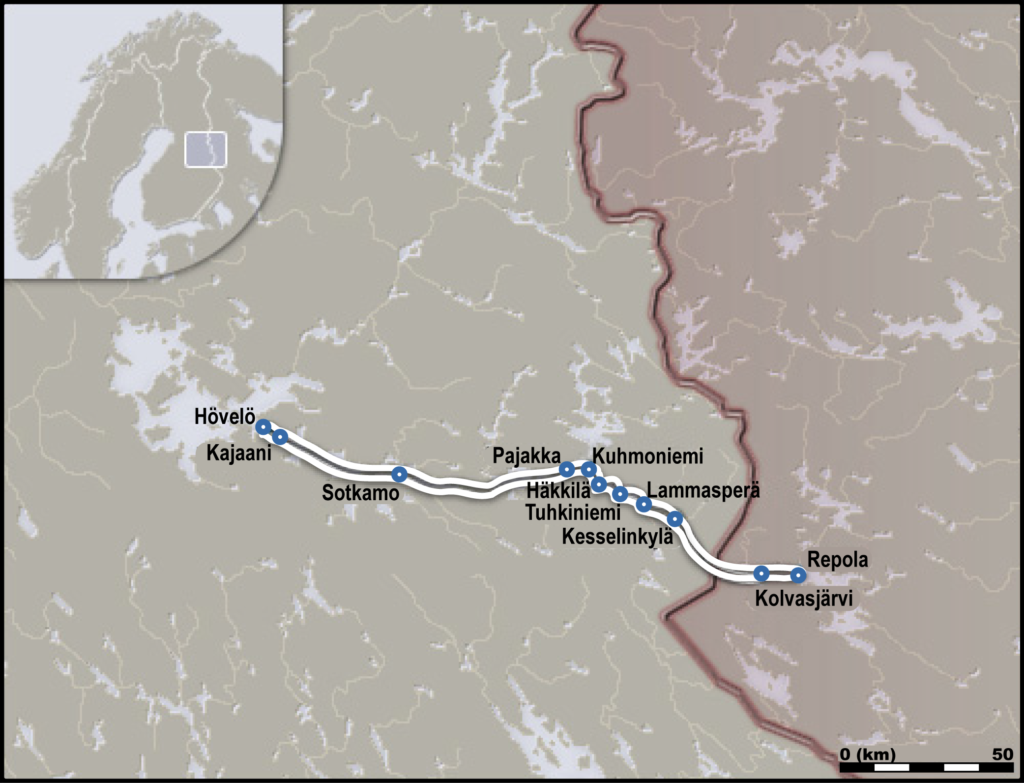
Here is the route: Vesilahti - Tampere - Jyväskylä - Kuopio - Kaavi - Nilsiä - Nurmes - Kuhmon Saunavaara - Repola - Akonlahti - Kuhmo - Kajaani - Kuopio - Porvoo - Helsinki.
The Fourth Journey (1833)
In January 1833, Lönnrot moved to Kajaani, making Kainuu his home for the next two decades. From there, he launched his fourth journey (September 9–28, 1833), which proved decisive for the birth of the Kalevala.
During this trip, which combined official duties with a ten-day detour into White Sea Karelia, he conceived the idea of constructing an epic from the collected material. Later that year, he sent a detailed account of the journey to J. L. Runeberg, who published it in Helsingfors Morgonblad.
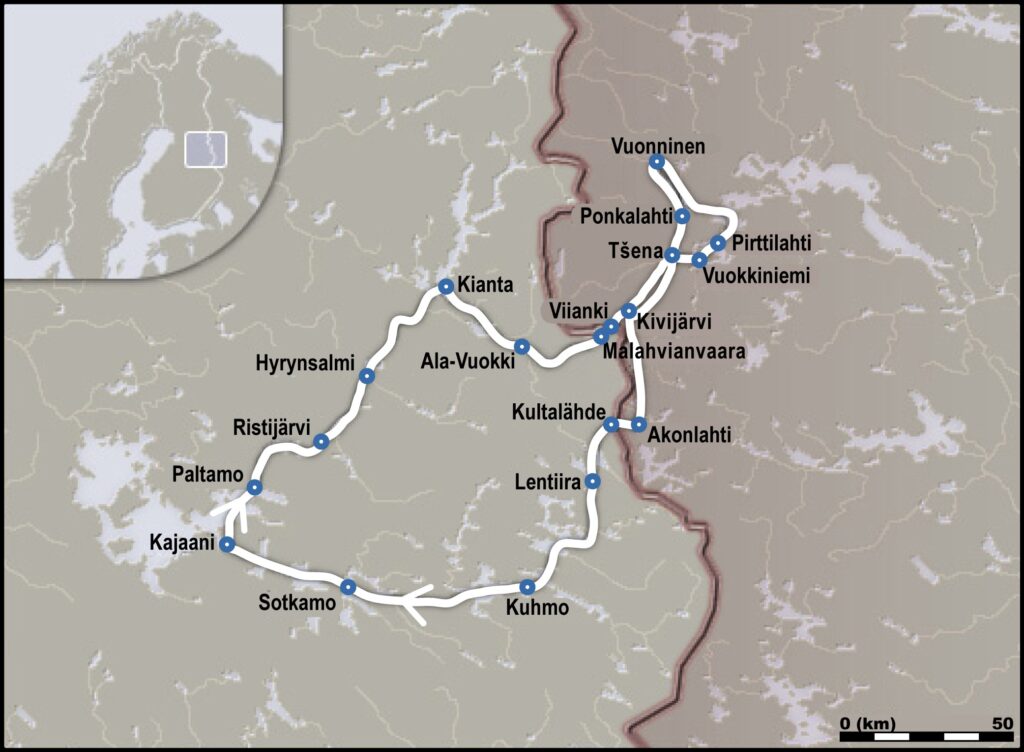
The route: Kajaani - Paltamo - Ristijärvi - Hyrynsalmi - Kianta - Kivijärvi - Tšena - Ponkalahti - Vuonninen - Pirttilahti - Vuokkiniemi - Tšena - Kivijärvi - Akonlahti - Kuhmo - Sotkamo - Kajaani.
The Fifth Journey (1834)
The fifth journey (April 13–30, 1834) was crucial for the content of the Kalevala. During this expedition, Lönnrot met Arhippa Perttunen, the most renowned runosinger of White Karelia. Perttunen’s influence on the epic was extraordinary.
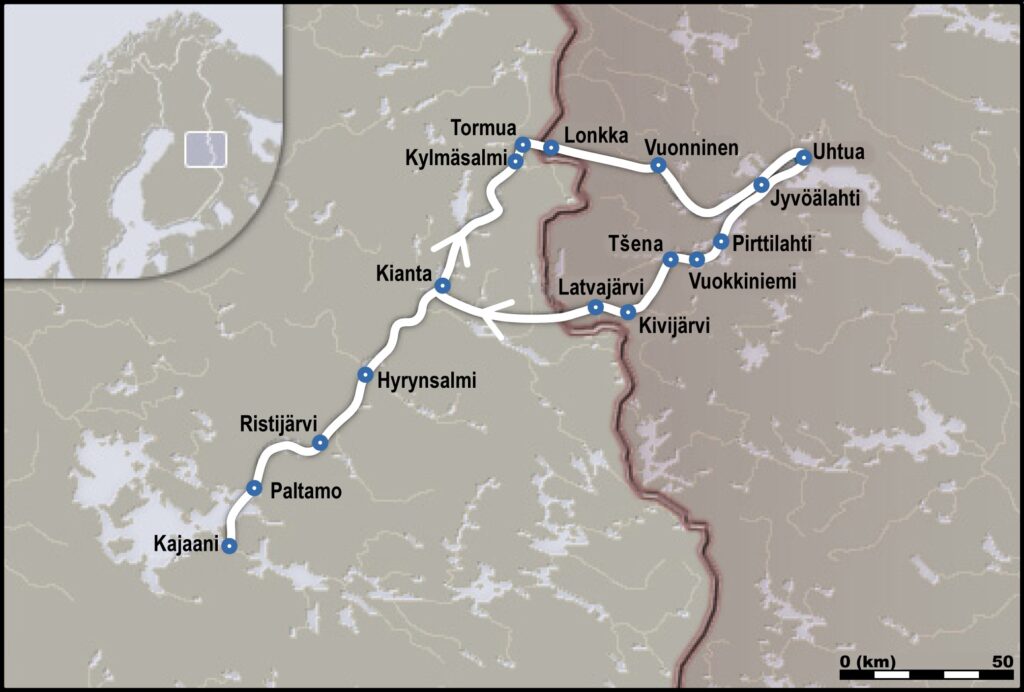
Here is the route: Kajaani - Paltamo - Ristijärvi - Hyrynsalmi - Kianta - Lonkka - Vuonninen - Jyvöälahti - Uhtua - Jyvöälahti - Pirttilahti - Vuokkiniemi - Tšena - Kivijärvi - Latvajärvi - Kianta - Hyrynsalmi - Ristijärvi - Paltamo - Kajaani.
Immediately upon returning, Lönnrot wrote to the Finnish Literature Society requesting that the printing of his manuscript be suspended, as the newly gathered material required substantial revision.
The Autumn Journey (1834)
In October–November 1834, Lönnrot traveled to Kuhmo on official business and made a detour to Repola in search of further additions to the manuscript.
The epic was nearly complete. The third notebook of the manuscript is dated November 11, 1834, in Kuhmo. This portion alone included the final eleven poems and 4,018 lines—over one third of the epic’s total length.
The Sixth Journey (1835)
Even after completing the Kalevala, Lönnrot continued collecting material, aiming to refine and expand the epic. In spring 1835, he set out again, combining medical duties with poetry collection in White Sea Karelia.
The journey did not unfold as planned; he was delayed in Kuhmo for several days. Nevertheless, the expedition yielded 103 songs totaling approximately 4,500 lines.
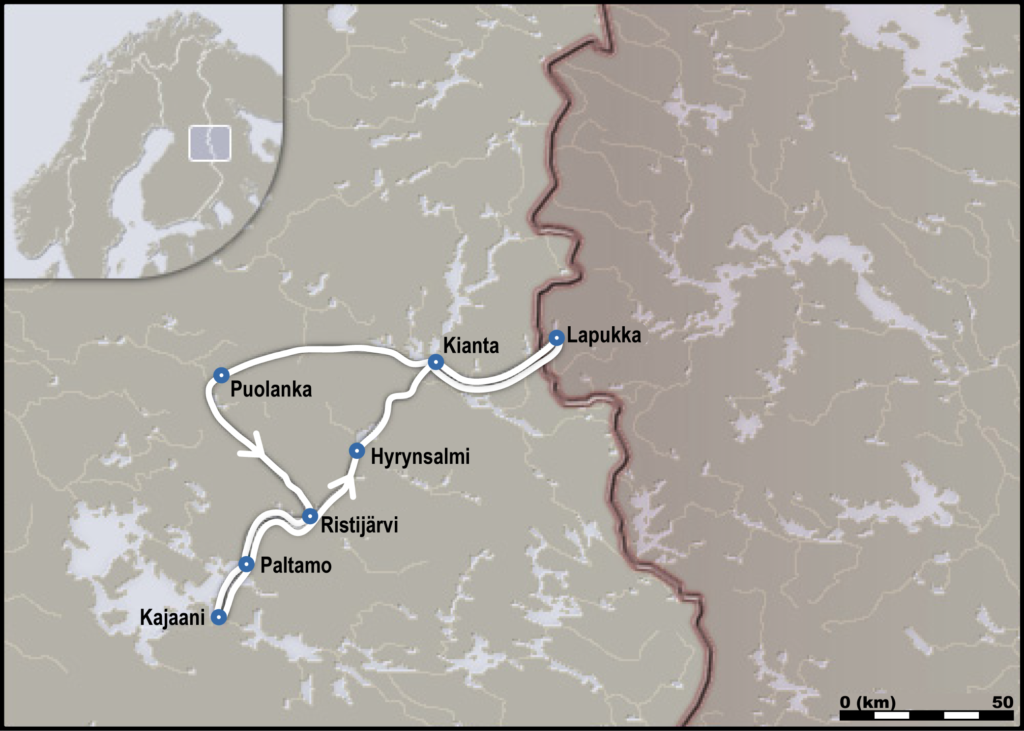
The visit to Lapukka (1835)
Out of curiosity, Lönnrot visited Lapukka, the home village of Arhippa Perttunen’s father, known as the “Great Iivana.” Perttunen had described his father as an exceptional singer and recounted vivid memories of nights spent singing by the campfire, where poems were never repeated and were learned by heart from childhood.
Here is the route: Kajaani - Paltamo - Ristijärvi - Hyrynsalmi - Kianta - Puolanka - Ristijärvi - Paltamo - Kajaani.
The Seventh Journey (1836)
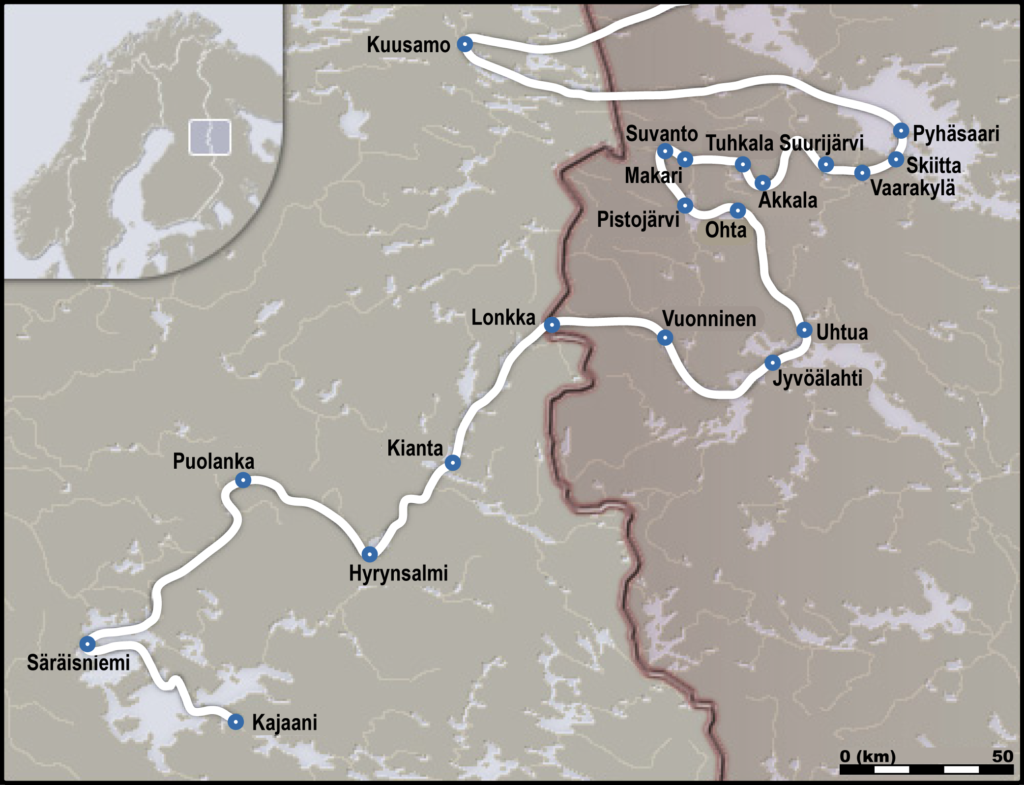
In 1836, Lönnrot received a grant from the Finnish Literature Society to map the distribution of the runosongs both in the north and the south. He received one year's leave of absence, which was extended to 14 months, in order to undertake an extensive field trip. The research plan stipulated that "first he was to visit the Finns living close to the national border from Kajaani to the north, and from there the trip was to proceed to the southeast, partly on the Russian, partly on the Finnish side."
In practice, the field trip was completed in two stages, as Lönnrot returned to Kajaani for a while after the trip north.
The Eighth Journey (1838)
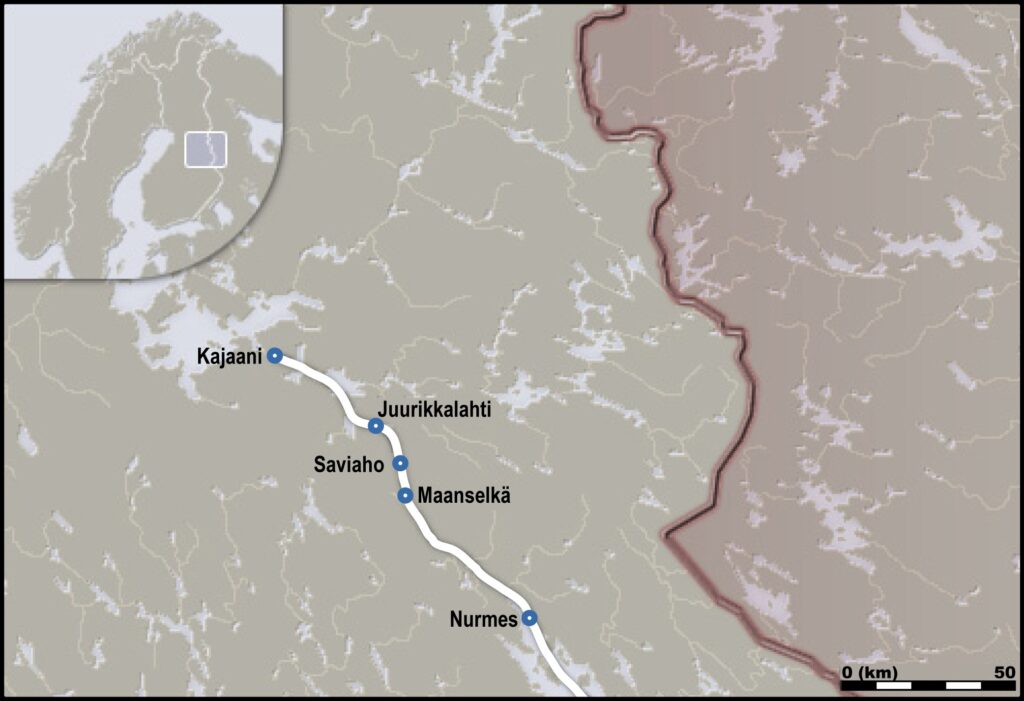
Little documentation survives about the eighth journey. The most significant encounter of this expedition was with Mateli Kuivalatar in Ilomantsi, an important lyrical singer.
Here is the most likely route: Kajaani (Polvila) - Sotkamo - Nurmes - Ilomantsi - Pielisjärvi - Kajaani
The most significant encounter was Mateli Kuivalatar in Ilomantsi.
The Ninth Journey (1839)
Previous scholars have not been consistent in their accounts of Lönnrot’s ninth field trip. In some studies, two separate journeys have been treated as a single expedition. This is likely because the first of these was regarded as “undoubtedly partly routine work-related travel, which we did not count as a poetry-collecting trip,” as A. R. Niemi explains.
It is worth noting that the fourth and sixth field trips also included ordinary official duties. Moreover, as Kaukonen points out, this work-related journey produced significant results: in Akonlahti alone, Lönnrot recorded 23 songs totaling 350 lines. By comparison, his “official” poetry-collecting expedition—undertaken while on formal leave of absence—yielded 80 poems comprising 800 lines.
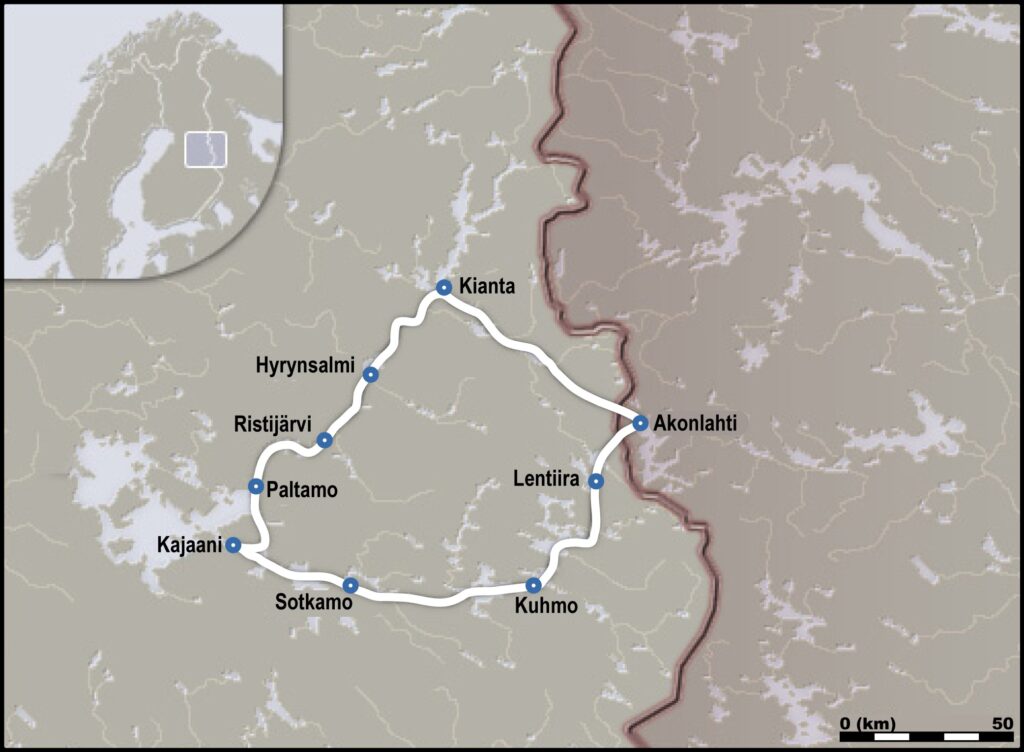
The first part of the ninth journey began in Kajaani on September 7, 1839, and concluded there around October 10, 1839. The route was as follows: Kajaani (Polvila) – Ristijärvi – Hyrynsalmi – Kianta – Akonlahti – Kuhmo – Sotkamo – Kajaani.
The Tenth Journey (1841–1842)
Lönnrot’s final two major expeditions focused on linguistic research rather than poetry collection. During the tenth journey, he traveled with M. A. Castrén to Finnish Lapland, the Kola Peninsula, and the White Sea coast, eventually reaching Arkhangelsk.
After Castrén continued to Siberia, Lönnrot proceeded to Vepsian territories. One outcome of this journey was his later dissertation on the Veps language, completed after he became Professor of Finnish in Helsinki.
The Eleventh Journey (1844)
His final major journey took him to Estonia. He studied Estonian in Tartu and met the author of Kalevipoeg along with other prominent cultural figures. On his return, he traveled through Votic areas and recorded additional folk poems.