Elias Lönnrot
"In the Kajaani district, people speak the clearest Finnish of anywhere I know in Finland"
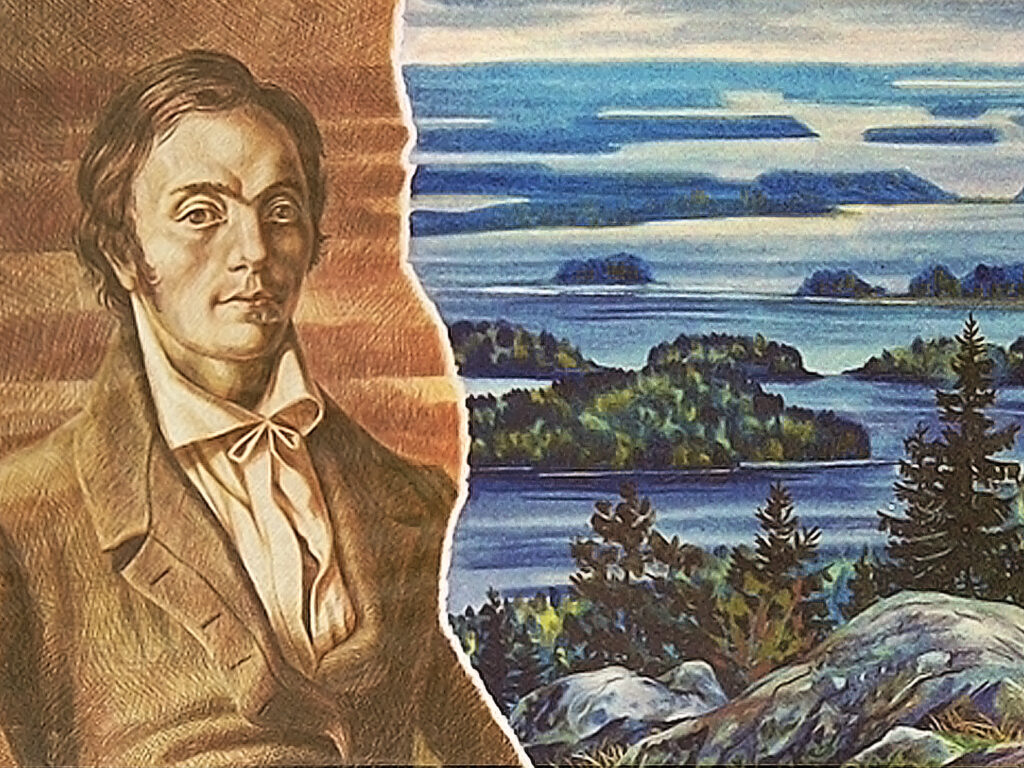
Elias Lönnrot was one of the great Finnish figures who profoundly influenced the emergence of Finland as a nation. While J. V. Snellman is often regarded as a political awakener of the nation, Lönnrot provided Finland with a cultural foundation for a shared identity. Through the Kalevala, he created a mythical past for the Finnish people, and through his linguistic work, he helped shape modern written Finnish.
By compiling dictionaries, he made the Finnish language accessible to the Swedish-speaking intelligentsia and laid the groundwork for scholarly research in fields ranging from botany to history. Inspired by Enlightenment ideals, he also addressed practical issues affecting ordinary people. In many respects, he was truly an educator and enlightener of the nation.
Elias Lönnrot was born in Samatti on April 9, 1802. His desire for education was exceptional for a child from a large tailor’s family. He first attended school in Tammisaari and later in Turku. Although financial difficulties sometimes interrupted his studies, he continued his education in Porvoo High School before leaving to work as a pharmacy apprentice in Hämeenlinna.
Through persistent self-study, he gained admission to the Academy of Turku in 1822—the same year as J. V. Snellman and J. L. Runeberg. He completed his Bachelor of Philosophy degree in 1827.
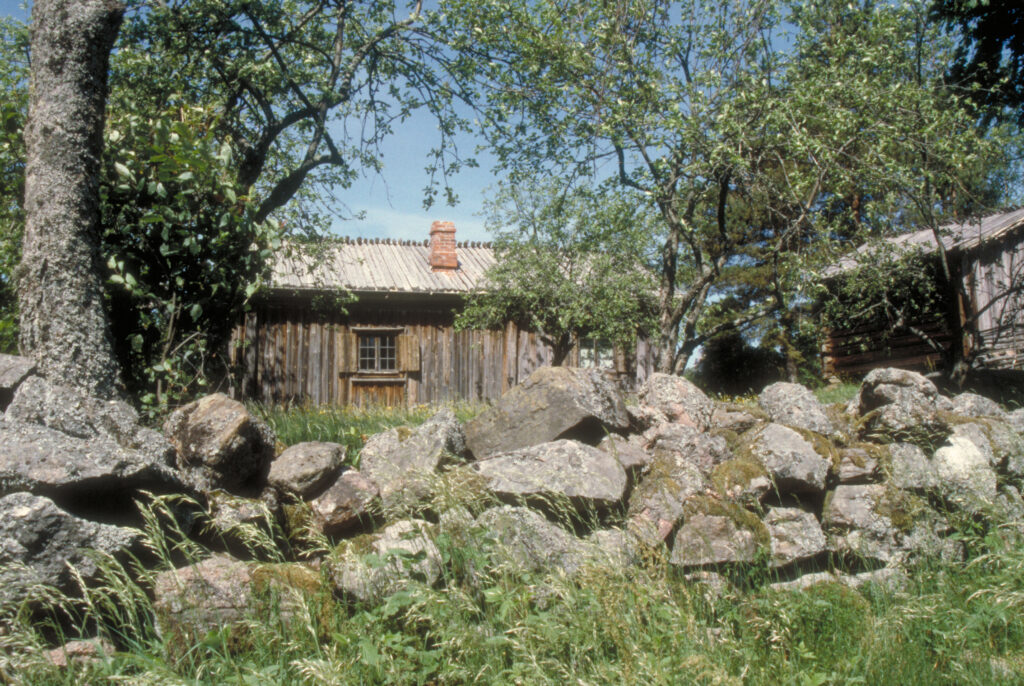
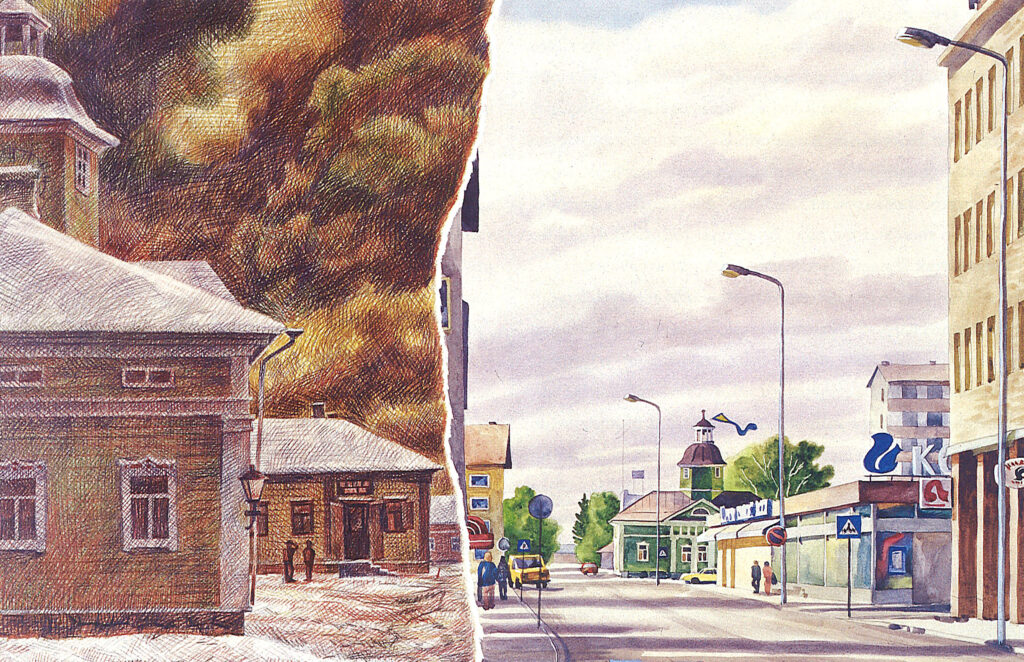
Elias Lönnrot was undoubtedly one of the most active travelers in Kainuu during his lifetime, largely because his professional duties required it.
For two decades, from early 1833 until the end of 1853, he served as district physician in Kajaani, responsible for the entire Kainuu region. His inspection tours and vaccination campaigns took him to nearly every village in the area.
In addition to his medical responsibilities, Lönnrot traveled extensively to collect folk poetry and conduct linguistic research. These journeys took him to Karelia and, at times, even farther—to Lapland, the Kola Peninsula, the Arkhangelsk region, Vepsian districts, and Estonia. Occasionally, he took formal leave from his medical duties to pursue these research expeditions.
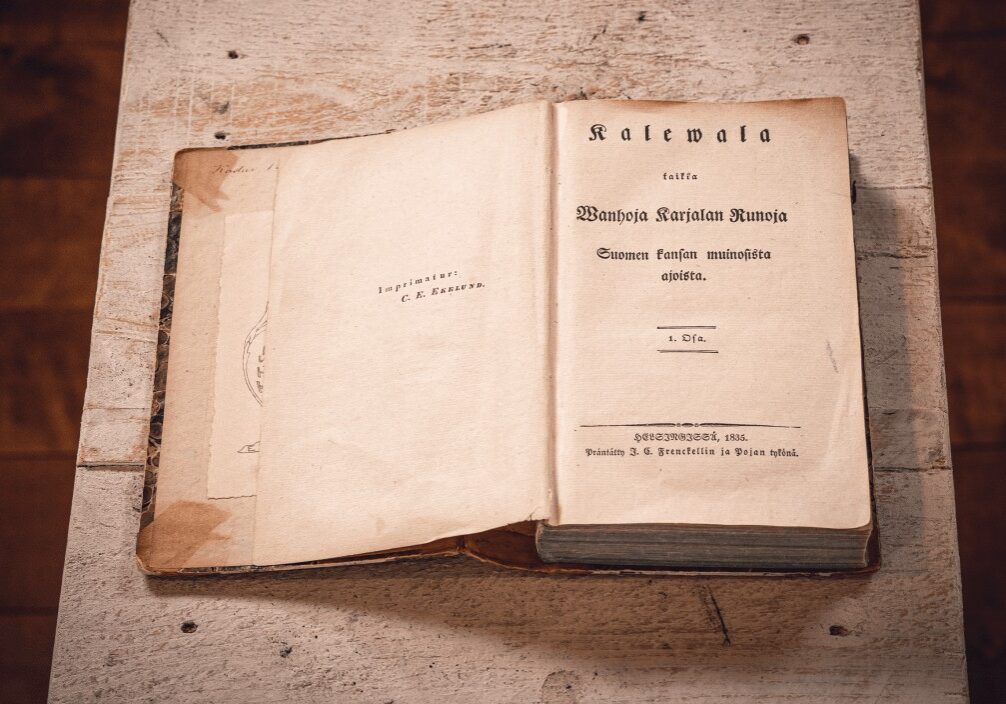
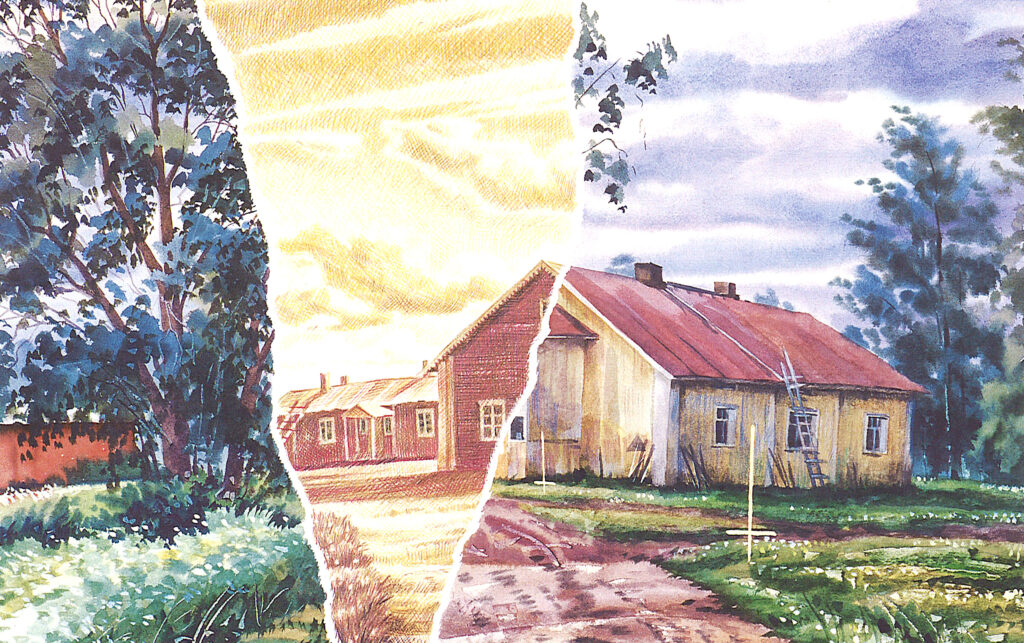
It has often been suggested that Hövelö in Paltaniemi was the birthplace of the Kalevala manuscript. Lönnrot did indeed work there, and it was his residence during the crucial months of 1834 when the epic began to take shape.
However, his life during that period was highly active. Shortly after returning from his fifth collecting trip, Lönnrot took a two-month leave (May 8 – July 23) to travel to Helsinki specifically to work on the manuscript. By the end of July, he had completed roughly one-third of the epic before returning to Kajaani to resume his duties.
Back in Kainuu, he undertook an ambitious schedule of inspection tours from August to mid-November. He carried the manuscript with him and worked on it whenever circumstances allowed.

The original Kalevala manuscript consists of three notebooks. Lönnrot signed the first on September 29, 1834, after returning from a vaccination tour that included Ristijärvi, Hyrynsalmi, Suomussalmi, and Puolanka. His travels then took him by boat across Lake Oulujärvi and onward to various villages throughout the region.
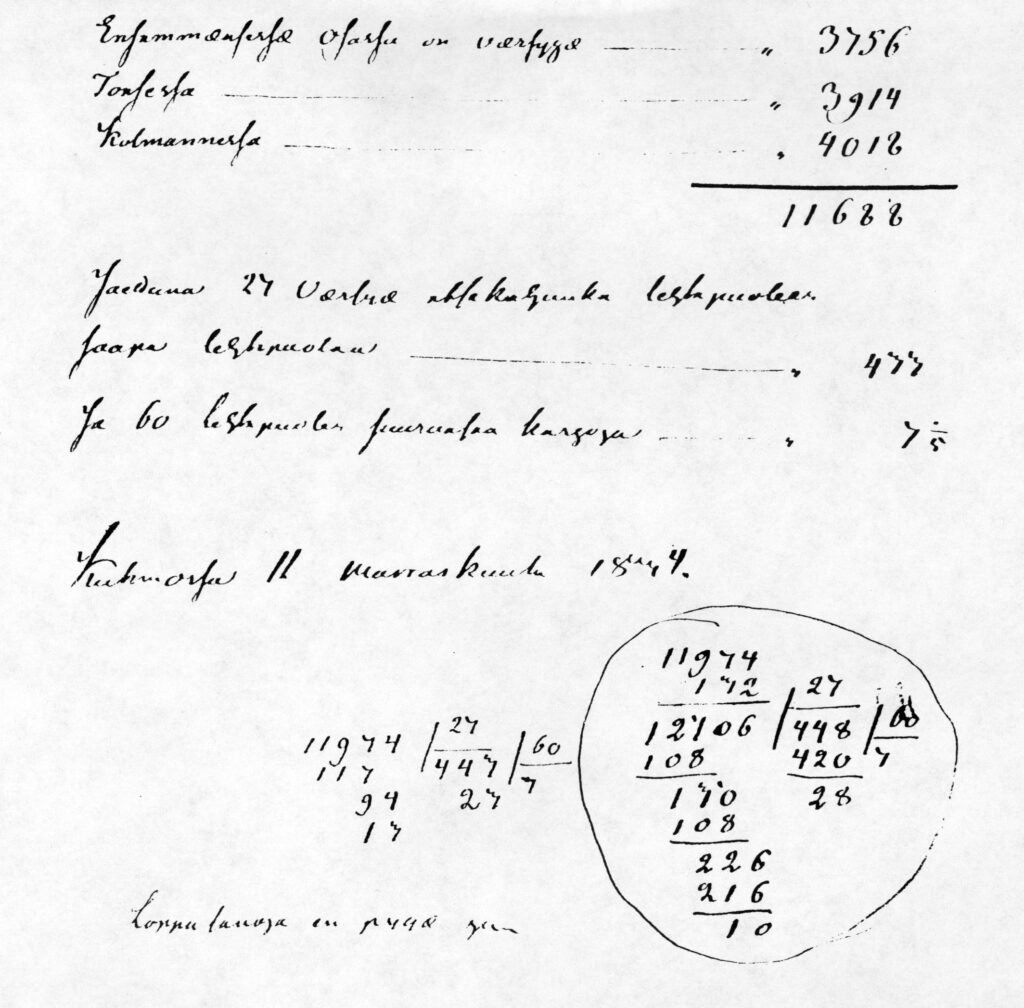
On October 20, he completed and signed the second notebook in Kajaani, although much of the work had been done in different parts of Kainuu. Soon afterward, he traveled to Sotkamo and Kuhmo for further medical duties, even crossing into Russia during a stop in Repola. During this journey, he completed the third notebook, signing it in Kuhmo on November 11.
At that point, the epic comprised 11,688 lines, lacking only a preface and minor revisions. The final published version would total 12,078 lines.
In this sense, all of Kainuu can be regarded as the birthplace of the Kalevala. While Lönnrot collected most of the poems in White Sea Karelia, the epic itself took shape across Helsinki and the municipalities of Kainuu, wherever he happened to be working.